






AI-driven diagnostics in telecommunication networks can reduce base station recovery times from around 90 minutes to as little as 15 minutes, demonstrating the potential of autonomous self-healing networks. An autonomous self-healing network is a telecom network that detects faults, diagnoses their causes, and fixes them with little or no human intervention. It does this by running a closed loop of automated monitoring and corrective action, usually driven by analytics and AI/ML. As the industry moves toward 5G-Advanced and 6G, these capabilities will be critical for improving network resilience, minimizing downtime, and enhancing service quality.
Innovation in this area is accelerating, with patent filings related to self-healing networks nearly doubling between 2021 and 2024, driven by advances in AI-powered fault detection, automated recovery, and intelligent network orchestration. However, technology alone will not enable large-scale adoption.
Realizing the full potential of self-healing networks requires robust industry standards that ensure interoperability across vendors, platforms, and network domains. Ultimately, success will depend not only on innovation leadership but also on shaping the standards that make autonomous, cross-vendor network operations possible.
Current Implementations and Industry Progress for Self-Healing Networks in 5G/6G
- Ericsson: Partners with Mobily to advance toward Level 4 network autonomy using automated self-healing use cases.[1] Ericsson also collaborates with AWS to deploy agentic AI across mobile networks to resolve video buffering and dropped calls in real time.[2]
- Huawei: Deploys its wireless intelligent solutions across more than 500,000 cell sites globally. Its AI system drops fault recovery times at base stations from 90 minutes down to 15 minutes using multi-agent cooperation.[3]
- Nokia: Works with Nvidia to develop AI-native Radio Access Networks (AI-RAN) designed for 5G-Advanced and future 6G systems, integrating deep learning directly into the network architecture for dynamic traffic routing and self-repair.[4]
- Tata Elxsi: Provided Tata Elxsi autonomous network operations that use intent-based orchestration and closed-loop automation to trigger instant self-healing and lower mean time to repair (MTTR).[5]
- Amantya Tech: Offers Amantya autonomous network solutions utilizing AI-driven radio apps (rApps) and Network Data Analytics Functions (NWDAF) to turn reactive telecom grids into proactive, self-optimizing systems.[6]
Patent Activity and Technology Trends
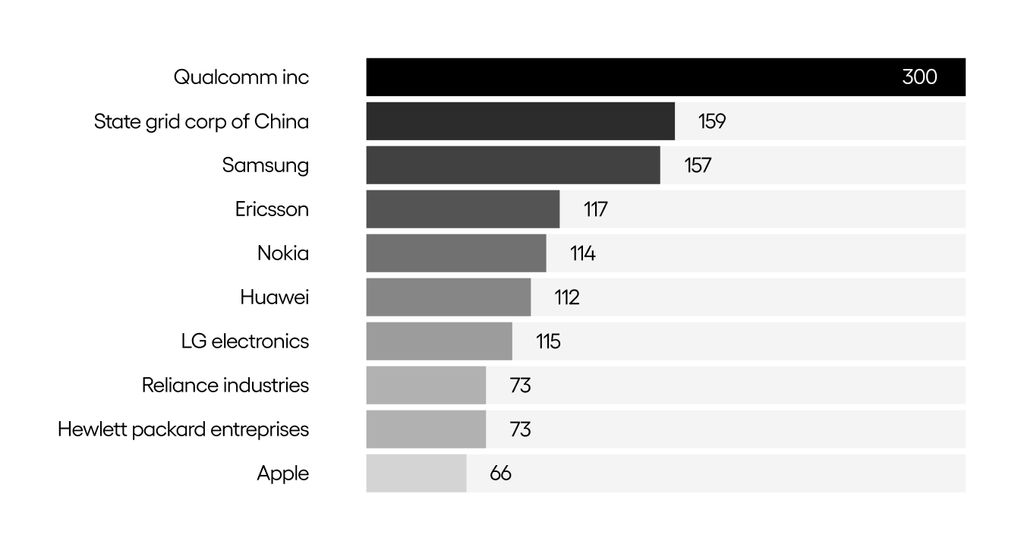
The patent landscape highlights the rapid maturation of AI-driven self-healing networks, with annual patent publications nearly doubling between 2021 and 2024. It reflects the industry’s growing investment in autonomous network operations for 5G-Advanced and emerging 6G environments. The future of self-healing capabilities as a strategic priority across network infrastructure, semiconductor, and digital platform providers is highlighted by the concentrated innovation leadership among major telecom and technology players.
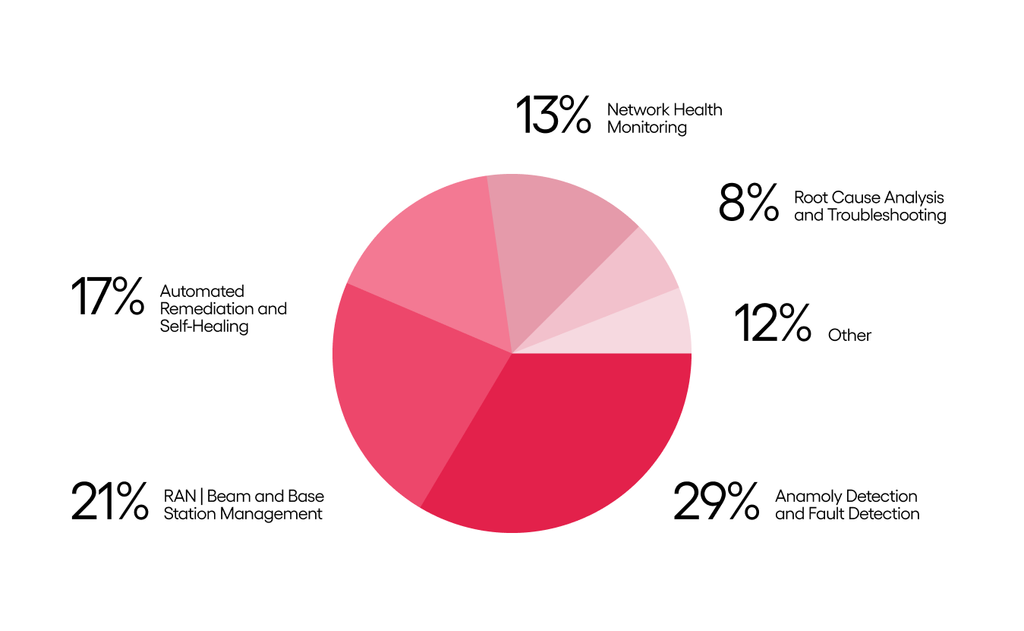
Technology-wise, innovation is strongly centered on Anomaly Detection & Fault Detection (28%), emphasizing AI-based identification of network failures, performance degradation, and service anomalies. This is followed by RAN, Beam & Base Station Management (20%), highlighting the industry’s focus on radio network resilience and beam recovery in advanced wireless networks. Automated Remediation & Self-Healing (17%) represents the next major innovation area, showcasing a transition from fault identification to autonomous corrective actions and closed-loop recovery. Supporting these capabilities are Network Monitoring & Health Management (13%) and Root Cause Analysis & Troubleshooting (8%), which provide the telemetry intelligence and diagnostic insights necessary to enable autonomous decision-making. Together, these categories indicate that the industry is moving beyond traditional monitoring toward networks that can predict, diagnose, and resolve issues with minimal human intervention.
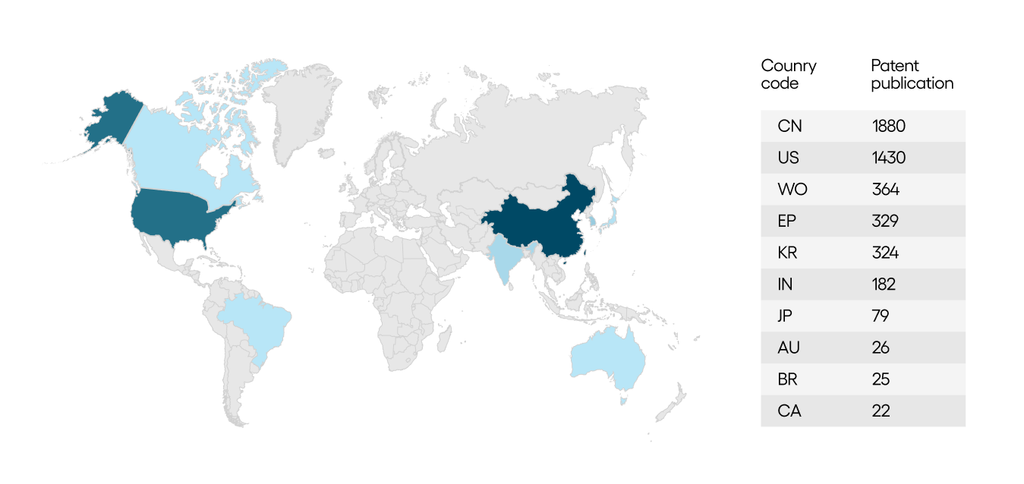
Overall, the four graphs collectively illustrate a market that is scaling rapidly, attracting broad participation from leading technology companies, and concentrating innovation around AI-powered assurance, radio network resilience, and autonomous remediation. This evolution closely aligns with the telecom industry’s vision of highly autonomous networks capable of delivering proactive, self-optimizing, and self-healing operations in future 5G-Advanced and 6G deployments.
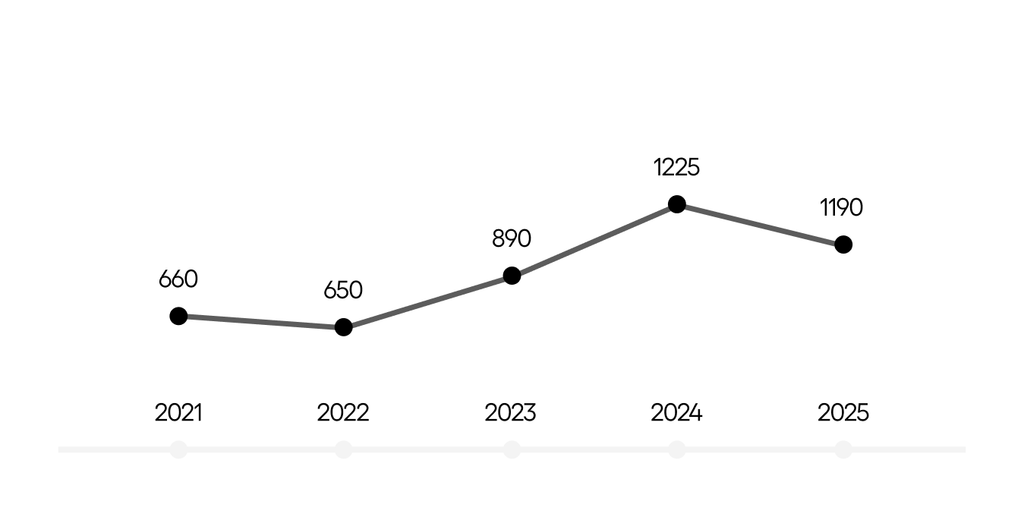
Figure 1: Filing Trend for last 5 years
The 3GPP Framework for AI-Driven Self-Healing
3GPP is where the self-healing lineage actually starts as a named, specified concept — and where it’s now being fused with formal AI/ML management standards:
The self-healing spec itself dates back over a decade. 3GPP TS 32.541, “Self-Organizing Networks (SON): Self-healing concepts and requirements,” first defined self-healing as a formal SON function — automatic detection, diagnosis, and compensation for network faults (like cell outages) — building on the foundational study in TR 32.823. Companion specs TS 32.522 and TS 32.526 defined the SON Policy Network Resource Model that let self-healing functions actually be configured and controlled across vendor equipment.
- SA5 (the working group behind Management, Orchestration, and Charging) owns this lineage and has spent the past several releases evolving it from rule-based automation toward AI/ML-driven decision-making.
- Release 17 introduced the management-side split that makes AI-driven self-healing possible today: TS 28.104 specified Management Data Analytics (MDA), and TS 28.105 split off as a dedicated spec for AI/ML management — giving operators a standardized way to train, deploy, and monitor the AI models that now sit inside fault detection and remediation loops.
- Release 18 turned this into a domain-agnostic AI/ML lifecycle framework, cataloguing over 40 management use cases (documented in study report TR 28.908) across the full AI/ML lifecycle — data collection, training, deployment, and inference — which is the backbone that lets a self-healing function actually operate autonomously rather than on fixed rules.
- Release 19 extended that framework for consistency and scale as more domains (RAN, core) plug AI/ML-based functions into the same lifecycle management structure, and froze in 2025 with focus now shifting to Release 20.
- Release 21 will be the first release to carry this into genuine 6G normative specification — everything through Release 20 is 5G-Advanced plus 6G study work.
The real obstacles in deploying self-healing networks
Despite significant progress, key implementation challenges remain:
- Data silos and multi-vendor interoperability: Different vendors’ equipment and data formats don’t play well together, which limits how much of the network an AI system can actually see and control.
- Explainability and liability: If an autonomous system makes the wrong call and causes an outage, who’s accountable, and how do operators trust decisions they can’t fully interrogate?
- Security and adversarial risks: AI-enabled networks introduce new attack surfaces, including data poisoning, model manipulation, and unauthorized automated actions.
- Regulatory and governance requirements: Increasing scrutiny around AI governance, auditability, and compliance can complicate the deployment of fully autonomous network operations.
- Complex Root Cause Analysis (RCA): The visible network failure is often a downstream consequence of a deeper, hidden issue. Massive telemetry streams create an information overload, making it difficult for models to isolate the true underlying trigger without advanced filtering.
Key Takeaways and Future Outlook
AI-driven self-healing networks are poised to become a cornerstone of 5G-Advanced and future 6G operations, enabling faster fault resolution, improved resilience, and greater operational efficiency. Strong innovation activity, growing patent portfolios, and increasing commercial deployments highlight the industry’s commitment to autonomous network management.
However, the path to fully autonomous networks is not without challenges. Data silos, multi-vendor interoperability constraints, and concerns around explainability, trust, and accountability continue to limit large-scale adoption. Addressing these barriers will be as important as advancing the underlying AI technologies.
Looking ahead, the success of self-healing networks will depend on the industry’s ability to combine AI innovation with robust standards and governance frameworks. As 3GPP advances AI/ML management and 6G specifications, self-healing capabilities are expected to evolve from reactive recovery to predictive and proactive network optimization, bringing the vision of truly autonomous telecom networks closer to reality.
[1] https://www.ericsson.com/en/press-releases/5/2026/mobily-advances-autonomous-networks-with-ai
[2] https://www.ericsson.com/en/news/2025/6/ericssons-cognitive-network-solutions-and-aws-collaborate-to-propel-autonomous-networks-with-agentic-ai
[3] https://www.huawei.com/en/news/2026/3/mwc-core-network
[4] https://www.nokia.com/telecommunication-providers/
[5] https://www.tataelxsi.com/platforms/neuron-autonomous-network-platform
[6] https://www.amantyatech.com/autonomous-networks